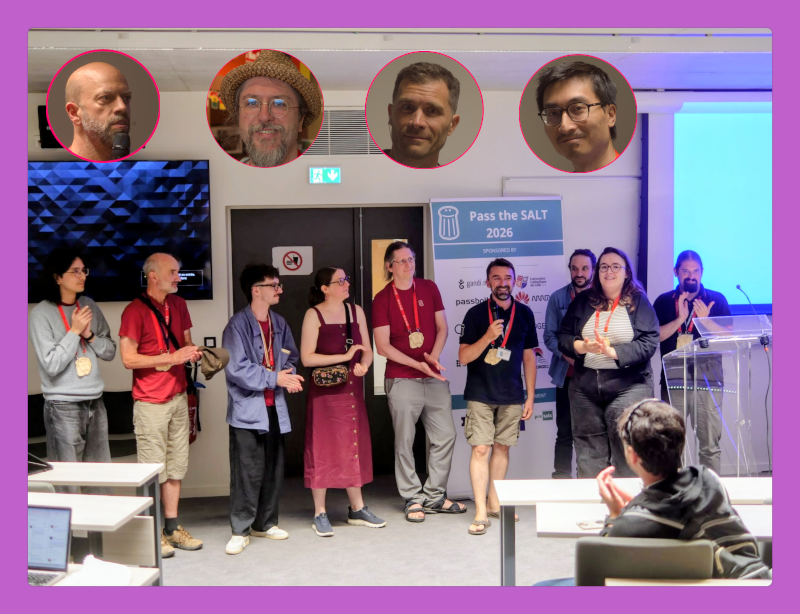
This document is the annual report for the 2026 edition of the conference. We share all the figures, insights, and analysis about the event.
- Highlights: figures, good points and improvements
- More details: conferences and workshops, audience and sponsors
- Conclusion
2026 Highlights ⚡
Figures
- Call for papers: 47 proposals (2025: 49), 30 accepted (32), 2 invited talks (i.e., 6.6%; 2025: 4 i.e., 12.5%), acceptance rate: 64% (65%)
- Audience: 170 registered people, 128 checked-in, no-show rate: 24.7% (2025: 170 registered, 140 checked-in, 17.6% no-show)
+ between 45 and 70 live stream users throughout the event! 💚 - Budget: ~€14,400 (2025: €13,500) with the following distribution: 48% catering (47%), 30% speaker reimbursements (24%), 15% goodies (16%), 7% servers, banking, etc. (10%).
These figures are relatively stable, and we are quite happy with them:
- A sufficient number of submissions allowed us to build a high-quality agenda of talks and workshops.
- An audience of 130–170 people is now a well-established level for mixing good research sharing, valuable interaction, and friendly moments.
- A level of sponsorship that allows us to provide the community with an event featuring expert speakers and quality social moments.
Good points
💚 Location: The Catholic University of Lille, initially a backup solution, ended up being adopted as the definitive location based on all the feedback received from attendees and speakers 💚
💚 Good vibes: Year after year, we are truly proud to receive positive feedback from people who have enjoyed the friendly atmosphere and been able to chat with speakers. Despite their high level of expertise and busy schedules, the speakers remain open-minded. We have also received appreciation from speakers who have valued not only the technical exchanges but also the relaxed conversations with new people and old friends. This means a great deal to us!
💚 Speakers quality: We received great and numerous feedback from attendees:
“The level of the speakers is just mind-blowing for such a small event. It is crazy that you managed to have them on stage in front of 170 people!” – a young attendee during the social event
…as well as from the speakers:
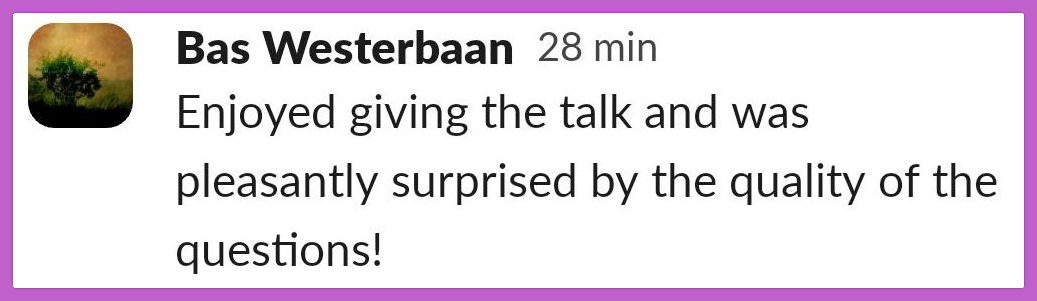
We were also really pleased with the high level of the invited talks, including:
- Bas Westerbaan from Cloudflare on Merkle Tree Certificates (PQC for WebPKI signed certificates)
- Sylvestre Ledru from Mozilla on Firefox and Security LLM.
- We were put in touch with Sylvestre thanks to Yves Alexis Perez (aka Corsac), leader of the SSTIC French cybersecurity conference team. Many thanks to him for this opportunity.
- This proves that a real link exists between community-run conferences, and we must nurture these team relationships ❤️
💚 We had slightly more speakers from the offensive side (VLN research, offsec) than usual.
💚 [New] A Program Committee has been formally created by adding two new experts to the core organizing team: Sébastien Larinier and Antoine Cervoise 🙏.
👉️ Their arrival allows us to reduce the number of proposals each PC member has to evaluate, enabling them to focus more on proposals in their areas of expertise. Antoine has also been able to provide expert feedback and assistance to one of the speakers on the topic of his proposal.
💚 [New] A quiet room was set up next to the workshop rooms. This was created in direct response to feedback received during and after the 2025 edition.
👉️ Based on the feedback received after its announcement, the room’s existence was appreciated. We will try to make it more visible in the future.
💚 [New] This year’s speakers’ dinner location provided everyone with a much better experience. We hope we have finally found a stable and valuable solution for future speakers’ dinners.
💚 Parking was available this year for the organizing team—a great addition that helped us a lot.
👍️ The Code of Conduct was activated for the first time. We were obviously not happy that a non-targeted sexist remark occurred during our event, but it proves that the Code of Conduct is actionable due to clear communication and an identified point of contact (Nathan).
👉️ The incident response (assessment and resolution) was carried out by Nathan 🙏 in coordination with the organizing team and in accordance with the wishes of the person who reported the incident.
Improvements
Some improvements and modifications have been identified by the team and/or in the speakers’ and audience feedback forms:
- The last afternoon did not have any break. It featured 3 long (35-minute) talks and 2 short (20-minute) ones with no breaks in between. It was a gamble, and it didn’t pay off 👉️ We will not do this again.
- A structural lack of speaker diversity (gender and background, among other factors). As in almost every year (with 2025 perhaps as an exception), we faced this issue, as have many other conferences in the field 👉️ We need to try harder and differently!
- Wi-Fi availability: We were not sure until shortly before the event started whether we would be able to provide Wi-Fi access, or under what conditions. Some attendees were ultimately unable to use it 👉️ Next year, we will assess its availability much earlier and will clearly communicate the conditions during the registration process.
- Pronoun usage: Several attendees asked us to provide a way to indicate their pronouns. We will look into how to properly implement pronoun usage, from collecting them from people who wish to specify them to displaying them as clearly and legibly as possible on badges.
- Workshop handling: We received feedback asking for more consistent workshop handling (and you are right!) 👉️ For each workshop submission, we will ask for a precise list of requirements and the maximum number of attendees the speaker wants in the room.
When specific concerns are raised through the feedback forms by identified attendees or speakers, we provide them with a direct answer. We share two of them here because we believe they may be of general interest:
-
AI “I was quite disappointed to learn that the stickers had been created using AI. I’m the first to use AI, but I think it would be much nicer to commission artists for this sort of thing […]”
👉️ Our (much shorter) answer: We have produced our own designs for years. We tried for several years to work with a particular artist, but it failed mainly due to their availability. Finally, AI enabled us to make the most of the limited time each volunteer could devote to organizing the event, while quickly coming up with two or three designs during one of the planning meetings that suited us all. -
Managing questions after talks “I don’t really understand the point, as a speaker, of waiting until you’ve picked up a microphone at the end of the talk to ask if there are any questions, rather than simply letting us ask for questions ourselves. I’d find that more natural, and that’s what I see at other conferences, but I’m sure you have a very good reason for doing it this way.”
👉️ Our answer: “We retake control, as we are responsible for managing the conference schedule in relation to the audience, the current speaker, and the speakers to follow. It is up to us to decide whether there is time for questions—or not. It is also up to us to ensure speakers rotate smoothly so that no one monopolizes the microphone. All of this is part of the organizers’ work and responsibility, and the slight dip in the flow is not a big deal, in our humble opinion, given the benefits it brings to the organization.”
More event details
Conferences and workshops
Submissions
| Year (IRL editions) | Submissions | Accepted | Invited talks among accepted ones | Acceptance Rate |
|---|---|---|---|---|
| 2026 | 47 | 30 | 2 (6.6%) | 64.0% |
| 2025 | 49 | 32 | 4 (12.5%) | 65.0% |
| 2024 | 39 | 30 | 2 (6.0%) | 77.0% |
| 2023 | 45 | 25 | 3 (12.0%) | 55.5% |
| 2022 | 39 | 27 | 5 (18.5%) | 69.2% |
| 2019 | 46 | 35 | 3 (12.0%) | 76.0% |
| 2018 | 37 | 29 | 2 (6.0%) | 78.3% |
Geographical speakers distribution
| Year | France | (rest of) Europe | (rest of the) World |
|---|---|---|---|
| 2026 | 53% | 30% | 17% |
| 2025 | 67.5% | 30% | 2.5% |
| 2024 | 61% | 30% | 9% |
| 2023 | 74% | 22% | 4% |
| 2022 | 77% | 23% | 0% |
The geographical distribution of our speakers aligns with the conference’s historical averages, with an exception for the “world” percentage, which is higher than usual.
Recording, streaming, and slides
Video team: Our friends from Ubicast were once again behind the camera, and the results were outstanding as always! 🎉
Content: Each talk was live-streamed, recorded, and made available online very quickly (in under 24 hours) thanks to the joint efforts of the Ubicast team and PTS team members @doegox and @cryptocorn 🤩
💚 Streaming: Once again, we had between 45 and 70 people connected to the live stream throughout the 3 days, which is a great result for us!
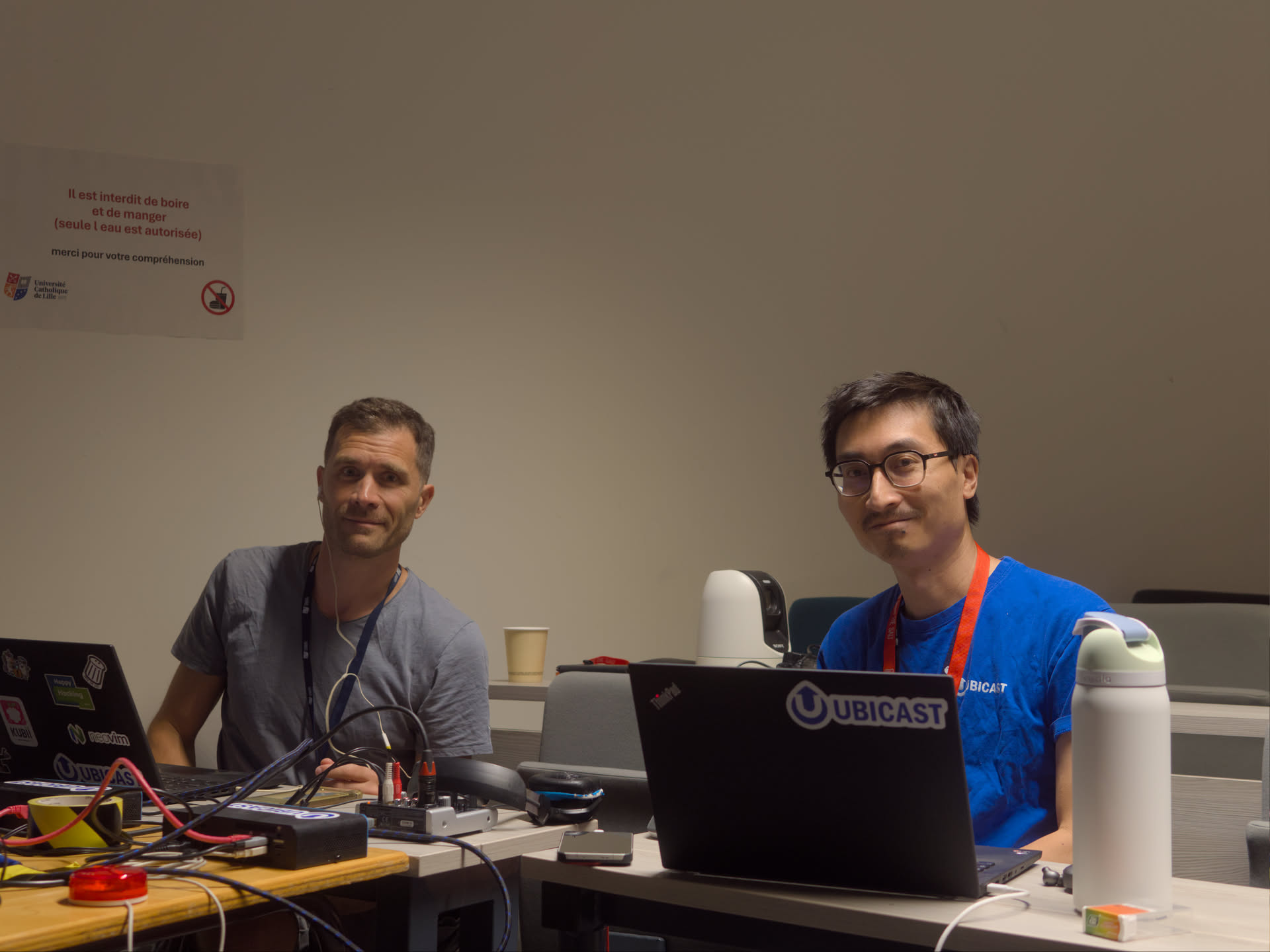
Video team: Fred & Charles from Ubicast. Photo by @julioloayzam.
📣 A special welcome to Charles Keat (on the right) from Ubicast, who joined the team for the first time—it has been a delight to work with you, as with Frédéric Chanal 🙏
Audience
Geography & Newcomers
| Lille | France (excluding Lille area) | (rest of) Europe, including the UK | (rest of the) World |
|---|---|---|---|
| 20.6% | 50% | 18.8% | 10.6% |
Additionally, we can share that 14.2% of the attendees do not speak French. Hosting an English-language conference is a way for us to provide them with an event in France that they can attend in a relatively comfortable manner.
We also asked during registration whether 2026 was their first Pass the SALT edition: 58% were newcomers.
Occupation
| Occupation | Value |
|---|---|
| Private sector | 55.2% |
| Students | 16.9% |
| Public sector | 14.3% |
| Other | 7.1% |
| Academic | 6.5% |
We are very happy to see a consistent percentage of students. After asking some of them during the social event, we found that many came in groups to practice and learn during the workshops they attended throughout the event.
Free and high-quality workshops are the main reasons for their attendance.
We are very proud to provide them with accessible opportunities to practice and learn from cybersecurity and open-source experts 🙏
Sponsors
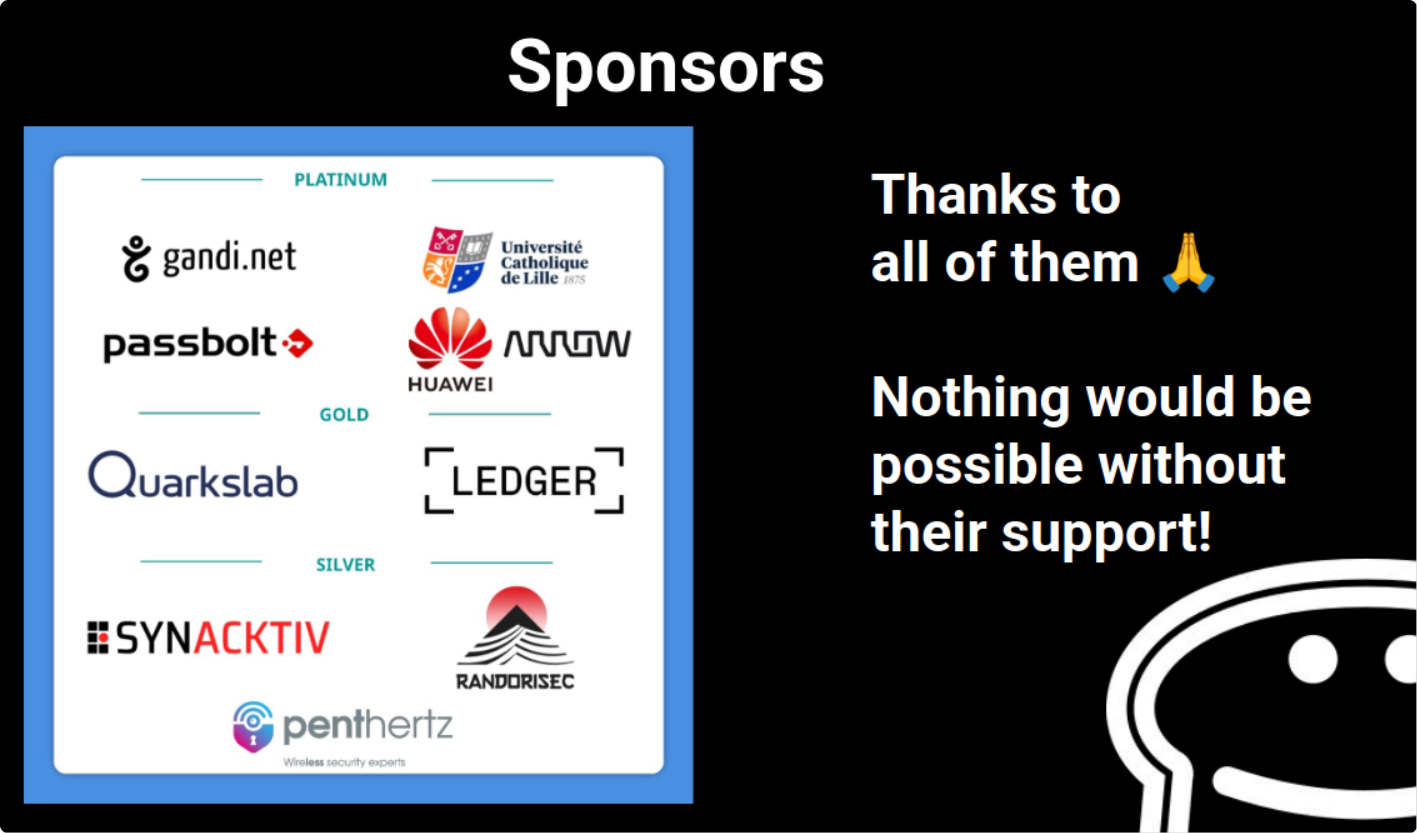
This year, Ledger and Huawei & Arrow supported us at gold and platinum levels, respectively. They joined our group of sponsors and partners who support us on a mid- to long-term basis to strengthen our organizing team:
- Platinum level: Gandi, Passbolt, Huawei & Arrow, Université Catholique de Lille
- Gold level: Quarkslab and Ledger
- Silver level: Penthertz, Synacktiv and RandoriSec
Thank you all so much! Your support enables us to exist, provide this free event to the community, share security-focused content, and create opportunities to meet and collaborate 💚
Conclusion
Each year, we try to create the best possible event to give you a special experience, mixing high-level expertise sharing with great moments of exchange.
When speakers like Gaëtan and Fabrice, and even past speakers like Aaron, share this kind of feedback, we usually feel that most of the work has been done ❤️:
- Gaetan Ferry (Gitguardian, security researcher): “Great social experience. Smooth presentation, very nice org people. Loved it all!”
- Fabrice Mouhartem (Cryptpad/Xwiki, Senior R&D Engineer): “As a second-time speaker at PTS and used to giving talks in different venues, Pass the SALT is really great. I appreciated the ‘be in touch’ with other speakers of the same track beforehand to prepare the talks accordingly to what other people would say (saving precious minutes about common ground on PQC, for instance). :)”
- Aaron Gable (Let’s Encrypt tech lead):
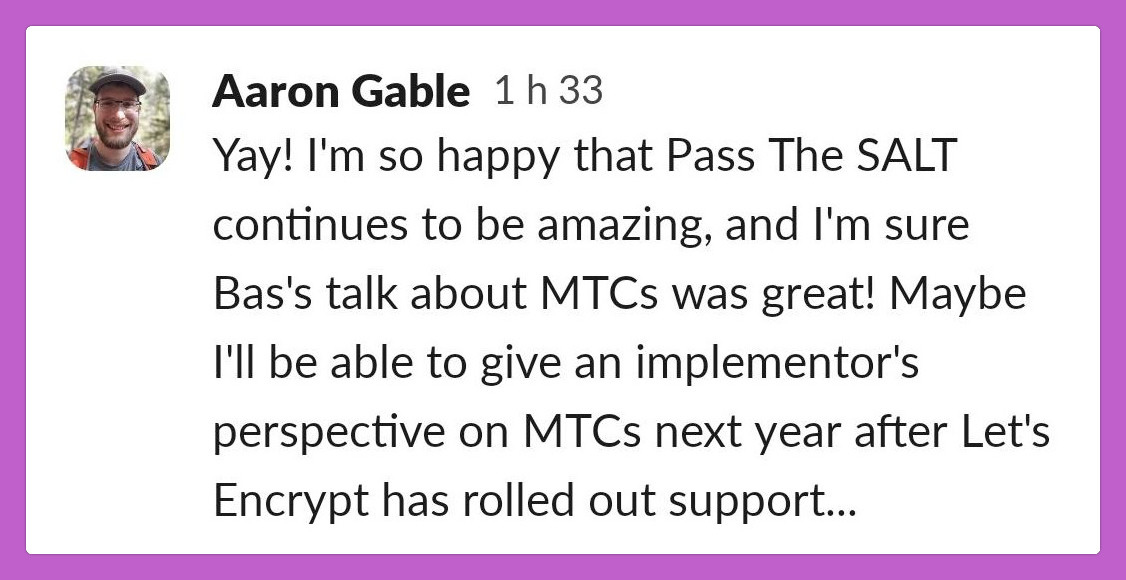
👉️ Feedback like this really matters because it is why we work throughout the year—it’s as simple as that! 🙏 #SmallIsBeautiful
👋 See you at the 10th edition of Pass the SALT in 2027! 😘 Pass the SALT 2026 Organizing Team